Climate Risks and Opportunities for Indian Mining and Metals Companies
CareEdge ESG analysis of emissions trends, carbon markets, CBAM exposure, risks, and strategic pathways for Indian mining and metals companies.
CLIMATE RISKS & OPPORTUNITIES
Indian Mining & Metals Companies (MMC)
An Analysis of Emission Trends, Structural Divergences, and Strategic Pathways
CareEdge ESG | May 2025
Executive Summary
India's mining and metals sector occupies a critical position in the country's climate transition — contributing approximately 12% of total national CO₂ emissions while simultaneously serving as the backbone of its infrastructure ambitions. This report analyses climate-related risks and opportunities for 12 listed Indian companies across integrated steel, iron ore mining, and industrial minerals, drawing on quantitative emission data, sustainability disclosures, and policy assessments.
A defining finding of this analysis is the structural divergence in emission trajectories between two sub-sectors: Scope 1 and 2 emissions in the ferrous metals sector are on a clear upward trajectory, while emissions in the mineral mining sector have trended downward. This contrast is not coincidental — it reflects fundamentally different decarbonisation feasibility profiles rooted in process chemistry, energy mix, and technology maturity.
The report further examines the evolving policy landscape — from India's nascent Carbon Credit Trading Scheme (CCTS) and the Perform, Achieve and Trade (PAT) mechanism to the European Union's Carbon Border Adjustment Mechanism (CBAM) — and assesses how Indian companies are beginning to respond to both compliance pressures and competitive opportunities in the green steel economy.
Sector Context
India is the world's second-largest producer of crude steel, with installed capacity of 179.5 million tonnes per annum (MTPA) and the world's largest producer of sponge iron (direct reduced iron, DRI) at 55 million tonnes. Per capita steel consumption of 97.7 kg in FY2024 remains well below the global average of 221.8 kg, signalling substantial latent demand as India pursues its infrastructure ambitions under the National Infrastructure Pipeline, the PM Gati Shakti programme, and the National Steel Policy's target of 300 MTPA production with 160 kg per capita consumption by 2030.
The sector contributes approximately 2% to India's GDP and 10–12% of its total CO₂ emissions — estimated at 240 million tonnes of CO₂ annually. Under current expansion trajectories, this figure is expected to nearly double by 2030, making the sector's decarbonisation pathway a material concern for India's nationally determined contributions (NDCs) and its credibility as a responsible industrial power on the global stage.
India's average steel emission intensity of 2.54 tCO₂ per tonne of crude steel (tCO₂/tcs) is the highest among major steel-producing nations. Even though five of seven large Indian steel companies have announced net zero targets, an Institute of Energy Economics and Financial Analysis (2025) finds that emission intensity for most Indian companies has worsened over the past three years, with capital allocation lagging behind stated ambitions.
Quantitative climate-related indicators for Indian MMC
CareEdge ESG's analysis of 12 companies — eight from ferrous metals and four from mineral and mining — reveals a striking divergence in both absolute emission levels and energy intensity.
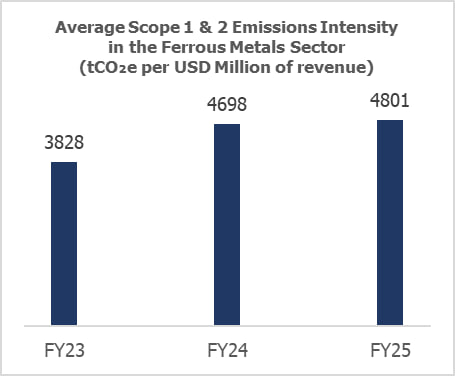
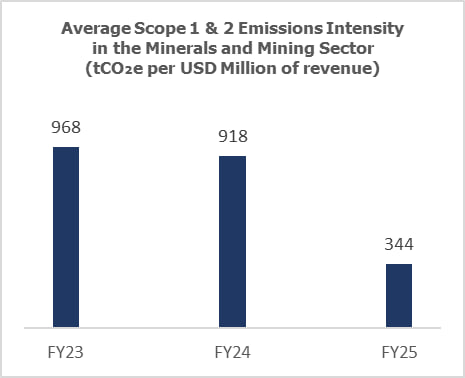
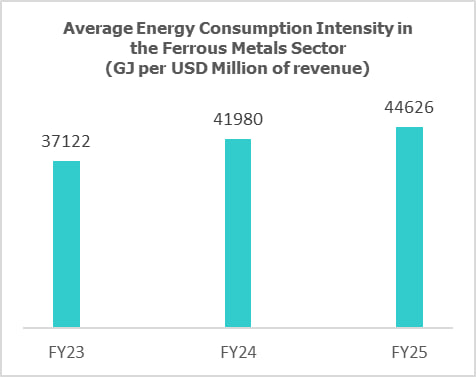
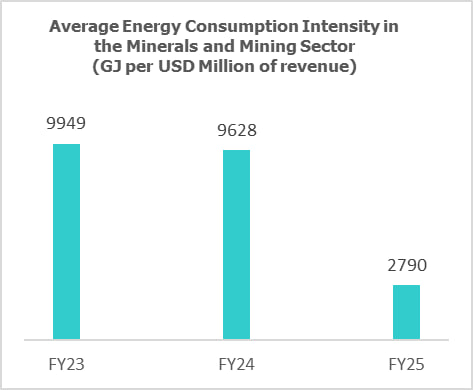
Mining’s energy demand is primarily electrical and mechanical, making it more amenable to renewable integration and efficiency improvements. In contrast, steelmaking emissions are deeply embedded in the chemical process of iron reduction, where carbon acts as a reductant. Abating these emissions requires a fundamental technological shift — one that has not yet occurred at scale in India.
In other words, integrating renewable grid electricity has been relatively straightforward in the mining sector, but replacing fossil fuels with renewable alternatives in steelmaking remains far more challenging. Rising absolute emissions in ferrous metals are also partly a volume effect, masking any per-unit efficiency gains that may exist.
Amid rising energy consumption and growing carbon dioxide emissions, the mining and metals sector is gradually beginning to generate and integrate renewable energy, although these efforts remain modest and at an early stage.
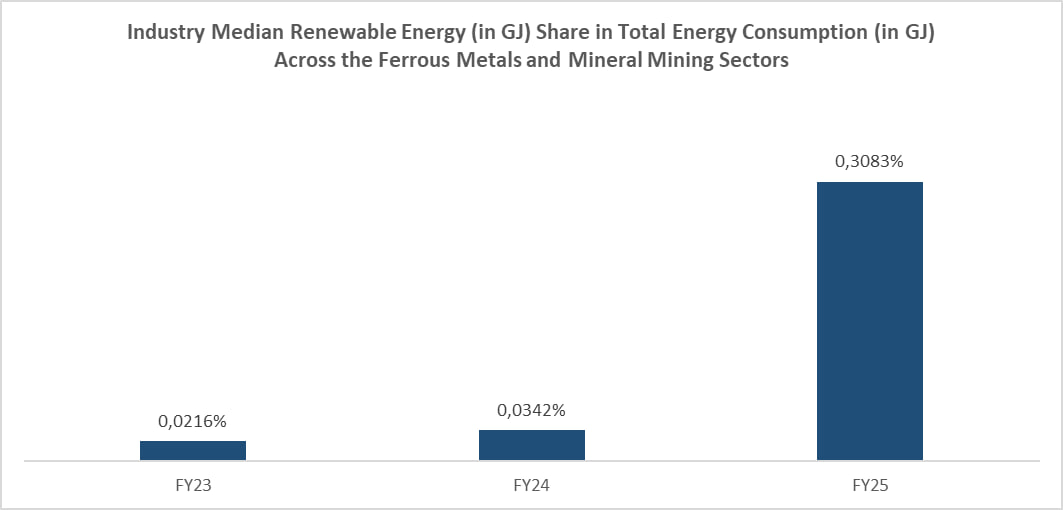
Companies such as Tata Steel have invested in waste heat recovery systems, energy-efficiency improvements, and renewable energy integration, enabling participation in carbon credit mechanisms. JSW Steel has pursued renewable power procurement and slag recycling projects as part of its broader ESG commitments. Yet the scale of these initiatives remains far below what would be required to bend the sector's overall emission trajectory downward.
India's Carbon Market
While renewable integration has shown modest increase, India’s carbon market is currently at a transitional stage, shaped by ambitious climate commitments but constrained by regulatory uncertainty, fragmented implementation, and limited market maturity. While the government has introduced the Carbon Credit Trading Scheme (CCTS) under the Energy Conservation Act to establish a compliance-based carbon market, the framework is still evolving, with institutional mechanisms, sectoral targets, and trading protocols yet to achieve full operational clarity. Existing mechanisms such as the Perform, Achieve and Trade (PAT) scheme and Renewable Energy Certificates (RECs) have laid the groundwork for market-based emissions reduction, but their impact has been uneven due to weak price signals, oversupply of certificates, and limited participation beyond energy-intensive industries.
A major challenge in the Indian carbon market is the absence of robust monitoring, reporting, and verification (MRV) systems across sectors. Data inconsistencies, inadequate disclosure standards, and varying measurement methodologies reduce the credibility and comparability of emissions reductions. Additionally, many Indian firms continue to rely on low-cost offsets rather than undertaking structural decarbonization, raising concerns about the environmental integrity of carbon credits. The voluntary carbon market also faces scrutiny over issues such as double counting, questionable additionality of projects, and limited transparency in pricing and transactions.
Another structural limitation is the dominance of renewable energy-based credits, while harder-to-abate sectors such as steel, cement, mining, and heavy manufacturing continue to face technological and financial barriers in reducing emissions. Small and medium enterprises (SMEs), which constitute a significant portion of India’s industrial base, often lack the technical capacity and financial resources to participate effectively in carbon trading mechanisms. Furthermore, fluctuating policy signals, evolving international carbon border adjustment measures, and uncertainty regarding the linkage between domestic and global carbon markets create additional risks for investors and industries.
Despite these challenges, India’s carbon market holds significant long-term potential due to expanding renewable energy capacity, increasing corporate ESG commitments, and growing pressure from global supply chains for low-carbon production. Several Indian metals and mining companies have begun engaging with carbon credit generation and renewable energy-linked offsets, although the scale and integrity of these initiatives vary considerably. For instance, Tata Steel has invested in waste heat recovery systems, energy-efficiency improvements, and renewable energy integration across its operations, enabling participation in carbon credit mechanisms under earlier Clean Development Mechanism (CDM) frameworks and domestic energy-saving certificate schemes. Similarly, JSW Steel has pursued carbon reduction initiatives through renewable power procurement and slag recycling projects, some of which have contributed to emissions reduction credits and ESG-linked reporting. India’s carbon market is gradually moving from a policy-driven framework toward an operational compliance mechanism, particularly with the implementation of the Carbon Credit Trading Scheme (CCTS) and the notification of emission intensity targets for multiple industrial sectors during 2025–26. The introduction of legally binding targets, the launch of the Indian Carbon Market portal, and the planned commencement of carbon credit trading mark important institutional developments in the country’s decarbonization strategy.
CBAM: Quantitative Financial Exposure and Trade Impact for India
The EU’s Carbon Border Adjustment Mechanism (CBAM) entered its transitional phase in October 2023 and moved to its definitive financial phase on 1 January 2026, requiring EU importers to purchase CBAM certificates linked to the EU Emissions Trading System (EU ETS) price for all covered goods — including iron and steel, aluminium, cement, fertilisers, electricity, and hydrogen. The first annual CBAM declaration for 2026 imports, along with certificate surrender, is due by 30 September 2027. For India, CBAM represents the most significant external trade-linked climate policy shock in recent history.
Scale of India’s CBAM Exposure
India’s CBAM exposure is substantial in scale. CBAM covers 777 tariff lines of Indian exports to the EU, predominantly metals — representing approximately 27% of India’s iron, steel, and aluminium product exports valued at USD 8.2 billion (GTRI, 2023). In FY 2022–23, iron and steel exports to the EU accounted for 23.5% of India’s total steel exports (valued at over USD 13 billion). In 2025, Indian steel exports to the EU totalled approximately EUR 4.2 billion, making the EU India’s most consequential single-region export destination for covered goods. India has formally raised concerns against CBAM 29 times at the World Trade Organization (WTO) between 2020 and 2024 — the second-highest frequency among all WTO members, behind only China and Russia — underscoring the policy’s perceived threat to India’s trade interests.
CBAM Cost Estimates for Indian Steel and Aluminium Exporters
The financial cost of CBAM for Indian exporters is directly a function of the gap between India’s carbon intensity and the EU benchmark. Key quantitative estimates are as follows: India’s average steel emission intensity of 2.54–2.65 tCO₂/tcs is 38–43% above the global average of 1.85–1.92 tCO₂/tcs, and materially higher than the EU average of 1.5–1.8 tCO₂/tcs and South Korea’s 1.6 tCO₂/tcs. This gap translates directly into CBAM certificate liabilities for every tonne exported. At the first-quarter 2026 EU ETS price, Indian aluminium exporters face a CBAM cost of approximately EUR 50.46 per tonne, compared to EUR 36.37 for Turkey and EUR 74.50 for Russia. For steel, a study cited by Bilancia Consulting estimates that India could face a CBAM duty of approximately EUR 173.8 per tonne when the mechanism is fully operational — equivalent to 16% of the unit export value. For hot-rolled coil specifically, Fastmarkets estimates that CBAM certificate costs for Indian exports could reach 80% of product value by 2030, versus just 6% for US-origin steel. A mid-sized Indian steel exporter shipping 50,000 tonnes annually to the EU could incur EUR 500,000–EUR 1.2 million in annual carbon costs by 2030 under current emission intensity levels. At the macro level, Indian steel exporters are estimated to face up to INR 19,000 crore (approximately USD 2.3 billion) in cumulative CBAM charges by 2030 unless significant decarbonisation occurs. The Centre for Science and Environment estimates CBAM could impose an additional 25% cost on Indian CBAM-covered goods exported to the EU, with overall projected export losses of USD 771 million, corresponding to a 0.72% decline in output to the EU (Majumder et al., 2024).
Early Market Signals: Volume Decline Already Visible
Early market signals confirm that CBAM is already reshaping India’s trade flows even before the definitive financial phase. Steel exports to the EU fell sharply during the transitional reporting phase (October 2023–December 2025), and aluminium shipments softened as EU buyers sought price discounts and firmer emissions data assurances. More strikingly, India’s unwrought aluminium shipments to the EU declined 41.7% year-on-year between January 2025 and January 2026 (from 18,654 tonnes to 10,875 tonnes), a contraction directly attributed to CBAM cost pressures. Research combining firm-level export data with emissions estimates (B-CCaS, October 2025) found that high-emission Indian steel firms have already reduced shipment sizes and prices to the EU, while low-emission firms maintained or slightly increased trade volumes — consistent with CBAM’s design intent of advantaging cleaner producers. These early adjustments are a harbinger of larger structural shifts once full financial enforcement takes hold.
CBAM and India’s CCTS: The Domestic Carbon Price Linkage
A critical strategic consideration is that CBAM allows for deductions based on carbon prices already paid in the country of origin. This means a credible, well-priced domestic carbon market could partially offset CBAM charges for Indian exporters. India’s CCTS — which notified draft emission intensity targets for the iron and steel sector covering 253 industrial units in June 2025 — is the most direct policy lever available to reduce CBAM exposure. However, the current CCTS carbon credit price range of INR 830–1,000 per tonne (approximately EUR 9–11 per tonne) is far below the EU ETS price of EUR 65–85 per tonne. Under CBAM rules, only carbon prices at the installation level that are legally paid and verifiable will be credited — making India’s intensity-based, low-price system insufficient to provide meaningful CBAM relief without substantial reform. The CCTS covers nine industrial sectors including aluminium (target: 5.85% intensity reduction over two years), cement (3.4%), and pulp and paper (7.15%), with iron and steel targets expected to be finalised in the 2026–27 compliance cycle. The Indian carbon market is projected to reach USD 10 billion by 2030, but only if CCTS price signals strengthen materially and MRV infrastructure is scaled up.
Key Policy and Strategy Commitments prioritized by MMC- Compliance-Driven with Limited Transition Vision
An analysis of the key policy and strategic commitments shaping the climate strategies of Indian mining and metals companies (MMCs) was conducted through a textual review of annual reports, sustainability reports, and media coverage. The findings indicate that the climate strategies of most companies (69%) are primarily driven by national regulations, including the Mines and Minerals (Development and Regulation) Act and the Environment (Protection) Act. Corporate strategies are also significantly influenced by Indian policy mechanisms such as the Perform, Achieve and Trade (PAT) Scheme, which establishes energy-efficiency targets for hard-to-abate sectors.
Beyond compliance-oriented measures, however, there is only limited emphasis on broader climate transition issues such as Carbon Border Adjustment Mechanism (CBAM) preparedness and net-zero commitments. Only 25% of the companies studied have announced net-zero targets for 2050 or earlier. Attention to CBAM-related measures is largely concentrated among export-oriented firms, accounting for just 19% of the sample. For instance, JSW Steel has developed digital dashboards and reporting systems to address CBAM requirements, while Tata Steel has already introduced low-carbon steel products in the European market. A few companies have also initiated green or low-emission steel plant projects as part of their long-term decarbonization strategies.
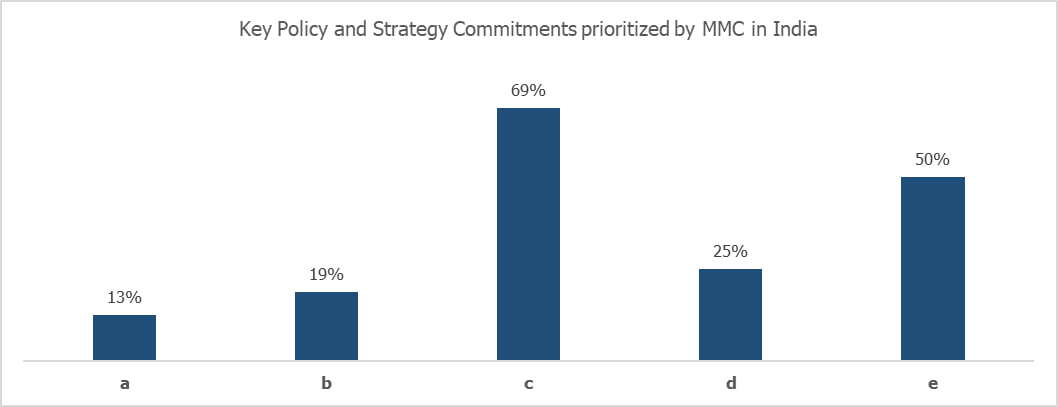
| a. Carbon Credits and Trading Scheme (CCTS) |
| b. Carbon Border Adjustment Mechanism (CBAM) |
| c. National Regulations such as Mines and Mineral Development Act, Environment Protection Act etc |
| d. Net-Zero Commitment |
| e. PAT Scheme |
Climate-Related Risks: Operational Risk Dominates, CBAM Underappreciated
The companies studied were screened for climate-related risks reported in their sustainability reports, materiality assessments, and BRSR risk assessment disclosures. The analysis found that a majority of companies (88%) identified operational risks arising from climate change, including disruptions to production, resource availability, and infrastructure. This was followed by concerns related to regulatory non-compliance, particularly risks associated with evolving reporting requirements, stricter environmental regulations, and potential penalties.
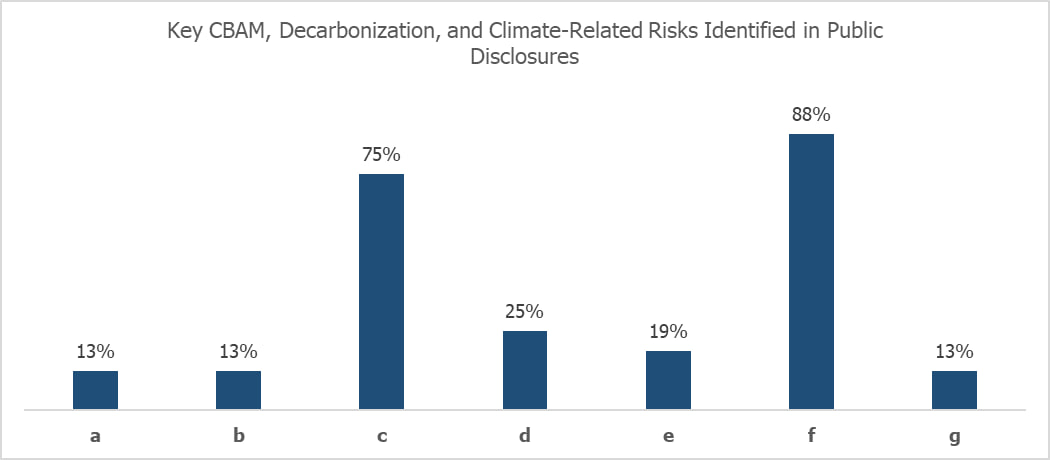
| a. Loss of export competitiveness in the EU due to carbon tariffs |
| b. Supply-chain disruption and reduced demand from export customers |
| c. Regulatory Pressure and Penalties Arising from Non-Compliance and Reporting Obligations |
| d. Investor pressure |
| e. Reputational risk |
| f. Operational risk arising from climate change |
| g. No explicit CBAM/climate-risk disclosure identified in reviewed public filings |
Around one-quarter of the companies also highlighted growing investor pressure to align with ESG standards and adopt decarbonization measures. Risks associated with carbon tariffs under the Carbon Border Adjustment Mechanism (CBAM) were mentioned primarily by export-oriented companies such as Tata Steel and JSW Steel. In contrast, the majority of companies neither reported nor disclosed any significant material risks related to CBAM.
Problem Statements: Key Structural Challenges Facing Indian MMCs
The following problem statements distil the most material structural challenges confronting Indian mining and metals companies in navigating the CBAM–CCTS regulatory landscape:
Problem 1 — Process-Locked Carbon Intensity: The Coal DRI Trap
India is unique among major steel producers in its heavy reliance on coal-based Direct Reduced Iron (DRI). Approximately 60% of India’s DRI — the world’s largest at 55 MTPA — is produced using coal, generating emission intensities of 3.0–3.1 tCO₂/tcs, compared with 1.37 tCO₂/tcs for natural gas-based DRI. Some BF-BOF plants in India emit as high as 3.83 tCO₂/tcs. Over 59% of India’s steel capacity uses the emissions-intensive BF-BOF route, and 65% of annual steel production comes from this route. EAF-based production, which has an emission intensity of only 1.1–1.3 tCO₂/tcs, constitutes just 30% of capacity and operates at lower utilisation (74% vs 84% for BOF). The structural dominance of coal in India’s iron reduction chemistry makes it impossible to decarbonise incrementally — it requires a fundamental technology transition. This is the core competitiveness problem: India is the world’s most carbon-intensive major steel producer, but its production expansion plans (targeting 300 MTPA by 2030) are built on the same carbon-intensive routes.
Problem 2 — MRV Infrastructure Deficit: Unverifiable Emissions in a Verified World
CBAM requires EU importers to present verified, installation-level emissions data using EU-equivalent methodologies. The absence of robust Monitoring, Reporting, and Verification (MRV) systems across India’s industrial base is the immediate compliance bottleneck. Only the largest listed companies (Tata Steel, JSW Steel) have developed CBAM-specific data infrastructure; JSW Steel has invested in digital dashboards for CBAM reporting, while the majority of the 253 iron and steel installations covered under CCTS’s draft targets lack the metering, data management, and third-party verification systems needed for CBAM compliance. For the secondary steel sector — which accounts for 40% of India’s steel production and is dominated by SMEs — the compliance burden is particularly acute. These firms face CBAM cost increases of up to 25% of product value, without the institutional capacity to accurately measure, report, or reduce their embedded emissions. Default CBAM values, which represent the worst-case emission profile, apply to exporters who cannot verify their actual emissions — creating a systemic disadvantage for smaller, less-sophisticated exporters.
Problem 3 — Carbon Price Mismatch: CCTS Cannot Substitute for CBAM
India’s CCTS — designed as an intensity-based, rather than absolute-cap, mechanism — creates carbon credit prices estimated at INR 830–1,000 per tonne (approximately EUR 9–11 per tonne). This is structurally misaligned with the EU ETS price of EUR 65–85 per tonne and CBAM’s certificate requirements. CBAM allows deductions for carbon costs already paid at the installation level, but India’s CCTS price gap means that even full CCTS compliance would offset only 10–15% of the CBAM liability facing Indian steel exporters. Furthermore, India’s intensity-based CCTS does not constitute a “carbon price” as defined by CBAM’s legal framework — creating a legal and diplomatic challenge that India must resolve through bilateral negotiations or domestic reform before the 2027 declaration deadline. India has been collecting approximately INR 54,000 crore in coal cess since FY 2010, but only a fraction has been channelled into climate-related investments — representing a missed opportunity to build a credible carbon pricing track record.
Problem 4 — Technology Financing Gap: Green Steel Capex Without a Business Case
The transition to green hydrogen-based DRI — the most effective decarbonisation pathway for Indian steel — requires concurrent investments in electrolysis capacity, hydrogen infrastructure, renewable energy, and steelmaking plant upgrades. India needs an estimated USD 120 billion in total investment to reach its target steel production of 300 MTPA by 2030, and the incremental capex for green hydrogen steelmaking is substantial. The H2-DRI pathway offers up to 84% emission reduction relative to BF-BOF (with a marginal abatement cost of ~USD 112 per tCO₂), but green hydrogen costs remain prohibitive at current Indian price points. Green hydrogen in India costs USD 4–6 per kg, versus a target of USD 1 per kg needed for commercial viability. The Ministry of New and Renewable Energy has allocated only INR 455 crore for piloting hydrogen in steelmaking — far below the scale required. India has 45 GW of planned renewable hydrogen projects, but over 80% remain in the concept stage. Meanwhile, EU, US, and Canadian governments are actively subsidising their industries’ green transition through the Inflation Reduction Act, Net Zero Industry Act, and equivalent mechanisms — creating an asymmetric policy environment that disadvantages Indian producers.
Problem 5 — Disclosure Gaps and Strategic Blind Spots Among Non-Export-Oriented Companies
Only 19% of surveyed MMCs have explicitly assessed CBAM-related risks, and the majority have not disclosed any material CBAM exposure in their sustainability reports, BRSR filings, or materiality assessments. This disclosure gap is not merely a reporting failure — it signals a deeper strategic blind spot. Even companies without direct EU exports face indirect CBAM exposure through supply chain relationships with export-oriented customers, potential second-order demand shifts as EU buyers reconfigure their supply chains, and future CBAM expansion risks to downstream sectors. The planned extension of CBAM to chemicals, glass, pulp and paper, and downstream manufactured goods — combined with similar mechanisms being developed in the UK, Canada, and potentially the US — means that today’s “domestic-only” companies could become CBAM-exposed within the next five to seven years. The failure of 81% of Indian MMCs to develop CBAM-specific disclosures or strategies constitutes a material ESG risk that investors are only beginning to price.
Strategic Opportunities: Decarbonisation as Competitive Advantage
Indian mining and metals companies are increasingly recognising the strategic opportunities emerging from the climate change and regulations such as CBAM, particularly in relation to decarbonisation-led competitiveness and green steel transition pathways. Half of the companies assessed - identified competitive advantage through early decarbonisation and lower carbon intensity, as well as cost optimisation and financing benefits from decarbonisation alignment. Meanwhile, nearly one-fifth of the companies identified opportunities related to new revenue streams and premiumisation through green steel product portfolios. A smaller proportion of companies acknowledged premium export opportunities for low-carbon steel in Europe and the strengthening of India–Europe green industrial supply chains.
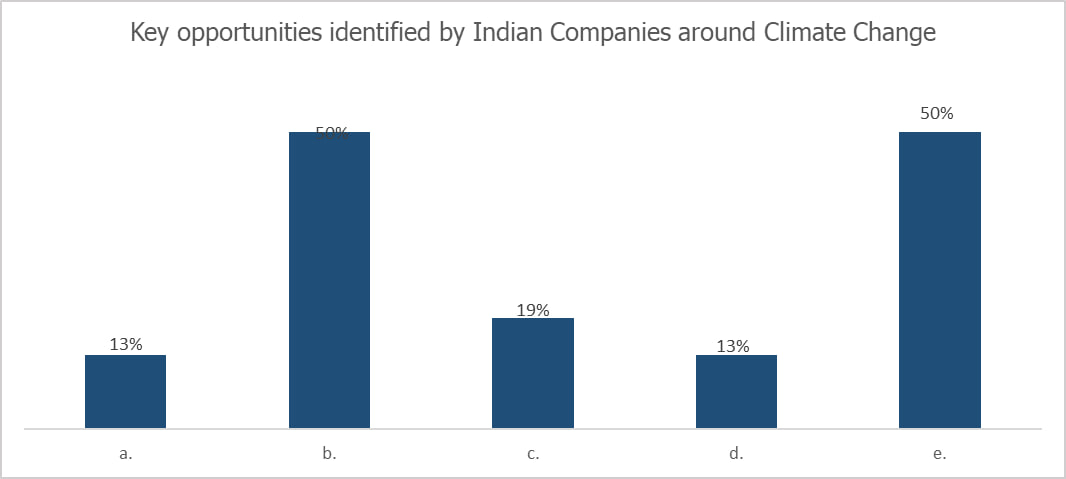
| a. Premium export opportunity for green / low-carbon steel in Europe |
| b. Competitive advantage through early decarbonisation and lower carbon intensity |
| c. New revenue streams and premiumisation via green steel product portfolios |
| d. Strengthening strategic India–Europe green industrial supply chains |
| e. Cost optimisation and financing benefits from decarbonisation alignment |
Proposed Solutions and Policy Recommendations
Addressing the structural challenges identified above requires action across four interlocking domains: technology deployment, carbon market reform, trade diplomacy, and company-level strategy. The following recommendations are calibrated to the timeline urgency imposed by CBAM’s definitive phase, with the first annual CBAM declaration due in September 2027.
Solution 1 — Accelerate the Green Hydrogen DRI Transition with a National Mission
The green hydrogen-based DRI route offers the most transformative decarbonisation potential for Indian steel — an 84% reduction in emission intensity relative to BF-BOF when fully powered by renewable electricity, and a 53% reduction even with a partial blend of 65 kg H₂ per tonne of steel in gas-DRI-EAF. The National Mission on Green Steel (NMGS) target of reducing emission intensity to 2.20 tCO₂/tcs by 2029–30 (from 2.65 today) should be treated as a floor, not a ceiling. Specific recommended actions include: scaling the SIGHT programme’s 450,000-tonne green hydrogen tender; co-funding the consortium-based pilot for hydrogen-DRI with the Ministry of Steel; mandating Green Steel Public Procurement from FY 2028 across National Infrastructure Pipeline projects; and creating a National Green Steel Development Fund, pooling part of the INR 54,000 crore coal cess collected since FY 2010 for technology demonstration and SME green transition grants. The current MNRE allocation of INR 455 crore for hydrogen-steel pilots should be scaled by at least 10x to achieve commercial demonstration scale. Early-mover companies like Tata Steel (targeting <1.8 tCO₂/tcs by 2030), JSW Steel, and niche producers like Kalyani Group (which already produces green steel at <0.19 tCO₂/tcs) provide credible proof points for the viability of the transition.
Solution 2 — Reform CCTS to Establish a Credible Domestic Carbon Price
India’s CCTS, while architecturally sound, needs structural reforms to function as a credible carbon pricing instrument capable of providing CBAM offsets. Priority reforms include: (a) Introducing a minimum floor price of INR 2,000–3,000 per tonne and a ceiling price that escalates toward EUR equivalency over a 5–7 year glide path; (b) Transitioning from intensity-only targets toward sectoral absolute caps for iron and steel by the 2028–30 compliance cycle, aligning with CBAM’s legal requirement for “equivalent effort”; (c) Strengthening MRV infrastructure through mandatory third-party verification for all 490+ CCTS-obligated installations, supported by the Bureau of Energy Efficiency’s Accredited Energy Auditors programme; (d) Using recycled CCTS penalty revenues (currently directed to CPCB) to fund green technology grants and SME decarbonisation support, rather than general environmental compliance; and (e) Negotiating a bilateral equivalency recognition agreement with the EU before the 2027 CBAM declaration — a strategy the EU has already pursued with Switzerland under the EU ETS-linked framework. A credible domestic carbon price, officially recognised by the EU as equivalent, would substantially reduce the CBAM liabilities facing Indian exporters and could save the sector USD 500–700 million annually by 2030.
Solution 3 — Build National MRV Infrastructure and SME Capacity
The secondary steel sector — 40% of India’s production, dominated by SMEs — faces the steepest compliance cliff from CBAM. A national programme to build installation-level MRV capacity across the sector is a prerequisite for any CBAM offset claim. Recommended interventions include: establishing a Steel Sector CBAM Readiness Helpdesk under the Ministry of Steel, offering subsidised emissions verification services for secondary steel producers; developing a standardised Indian Steel Emissions Protocol (ISEP), equivalent to EU Implementing Regulation 2023/1355, to enable verified emissions data that CBAM importers can use directly; mandating CBAM data readiness as part of the BRSR (Business Responsibility and Sustainability Report) framework for all listed companies with EU export exposure; and creating a cluster-based MRV support model for MSME steel producers in hubs such as Raipur, Vizag, and Jamshedpur, with government-funded emissions metering infrastructure. The CCTS’s CCC registry — operated by the Grid Controller of India — should be expanded to serve as a central repository of verified installation-level emissions data accessible to EU CBAM importers.
Solution 4 — Scrap Steel Economy: Accelerate Circular Steel Infrastructure
Scrap-based EAF steelmaking emits only 1.1–1.3 tCO₂/tcs — half the current Indian average — and does not require hydrogen infrastructure. As India’s steel stock matures over the next decade, the available scrap pool will grow significantly, enabling a larger share of low-emission EAF production. Policy actions to accelerate this pathway include: implementing the Vehicle Scrappage Policy fully to formalise steel scrap collection; creating scrap trade facilitation infrastructure (scrap processing clusters, standardised scrap grading, public scrap aggregation entities); offering production-linked incentives (PLI) for investments in EAF capacity conversion from induction furnaces; and relaxing scrap import duties on high-grade steel scrap to supplement the domestic supply while the scrap pool builds. Reducing coke consumption in blast furnaces through ore beneficiation, improving raw material quality through additional concentration plants, and intensifying scrap recycling within integrated steel plants are near-term measures that can meaningfully reduce BF-BOF emission intensity from the current 2.5–2.7 tCO₂/tcs toward 2.0–2.2 tCO₂/tcs — the threshold that substantially reduces CBAM certificate costs without requiring full technology transition.
Solution 5 — India–EU Green Steel Trade Framework and Market Diversification
India should pursue a proactive bilateral trade strategy with the EU, rather than a purely defensive WTO posture. A proposed India–EU Green Steel Compact could include: mutual recognition of CCTS carbon credits toward CBAM obligations (contingent on CCTS price floor reforms); joint investment in green hydrogen electrolyser manufacturing (leveraging India’s renewable energy advantage and the EU’s technology leadership); preferential market access for verified low-carbon Indian steel products under the India-EU Free Trade Agreement negotiations currently underway; and a technology transfer arrangement enabling Indian steelmakers to access CCS and H2-DRI technologies developed under EU Horizon research programmes. Simultaneously, Indian steel companies should diversify their export strategy toward South and Southeast Asia, the Middle East, and Africa — markets where CBAM-equivalent carbon border policies are not yet in force — while investing the 5–10 year window thus gained in genuine decarbonisation. This two-track strategy (protect EU market share through low-carbon differentiation; grow non-EU market share through volume) is the most commercially rational response to the CBAM environment.
Conclusion
The structural divergence between ferrous metals and mineral mining is not a story of differential effort — it is a story of differential feasibility. Mining can decarbonise incrementally through electrification and efficiency; steelmaking requires a reinvention of its core chemistry. India's steel sector cannot simply buy its way to net zero through offsets or renewable energy procurement: it must change how iron is made.
The pathways exist — green hydrogen DRI, CCS-enabled blast furnaces, scrap-based EAF as India's steel stock matures — but they require long investment horizons, supportive policy, and a carbon pricing environment that makes low-carbon production commercially rational. India's CCTS, when fully operational, can play this role, but only if MRV systems are strengthened, price signals are meaningful, and coverage is broadened beyond the current set of large energy-intensive industries.
For Indian mining and metals companies, the strategic imperative is clear: the companies that move earliest to quantify, verify, and reduce their carbon intensity will be best positioned for a world where carbon is priced, CBAM is operational, and global customers increasingly choose their suppliers on the basis of verified emissions. The window for early-mover advantage is open — but it will not remain so indefinitely.
Analytical Contact Nikunj Dube Chief Ratings Officer Nikunj.dube@careedge.in +91 – 72191 09995 | Relationship Contact Saikat Roy Chief Executive Officer Saikat.Roy@careedge.in +91 – 98209 98779 | Media Contact Mradul Mishra Media Relations Mradul.mishra@careedge.in +91 – 22 – 6754 3596 |
CARE ESG Ratings Limited
Corporate Office: A Wing – 1102 / 1103, Kanakia Wall Street, Andheri Kurla Road, Chakala, Andheri (East), Mumbai – 400 093
Phone: +91 - 22 - 6837 4400 l CIN: U66190MH2016PLC285575 l www.careedgeesg.com
CareEdge is a knowledge based analytical group that aims to provide superior insights based on technology, data analytics and detailed research. CARE ESG Ratings Limited (CareEdge-ESG) is one of the India’s leading ESG rating provider fostering sustainability with ESG insights. With an aim of being a catalyst of change for a sustainable future with the most credible ESG assessments, CareEdge-ESG provides a 360-degree appraisal for the ESG performance benchmarking cum transition enabling ESG risk mitigation and enhanced decision-making capabilities for all stakeholders.
Disclaimer:
This report is prepared by CARE ESG Ratings Limited (CareEdge-ESG). CareEdge-ESG has taken utmost care to ensure accuracy and objectivity while developing this report based on information available in public domain. However, neither the accuracy nor completeness of information contained in this report is guaranteed. CareEdge-ESG is not responsible for any errors or omissions in analysis / inferences / views or for results obtained from the use of information contained in this report and especially states that CareEdge-ESG Ratings has no financial liability whatsoever to the user of this report.
© 2026, CARE ESG Ratings Limited, a wholly owned subsidiary of CARE Ratings Limited. All Rights Reserved.
This content is being published for the purpose of dissemination of information. Any use or reference to the contents on an “as-is” basis is permitted with due acknowledgement to CARE ESG Ratings Limited. Reproduction or retransmission in whole or in part is prohibited except with prior written consent from CARE ESG Ratings Limited.